
Shawnee County Court Calendars Explained
Two records do different work in the Kansas District Court, Third Judicial District. The daily docket lists settings and courtroom activity for one date. The appearance docket tracks filings, appearances, orders, judgments, and payments over the life of a case. The Shawnee County Clerk of the District Court keeps it. Start a date check with the official Shawnee County daily docket. Need to trace what happened afterward? Turn to Kansas CaseSearch or the appearance docket.
The court information page ties the daily docket to other tools. Those include case search, e-filing, payment, and courtroom resources. Each tool has its own job. Remember that a listing schedules a hearing without telling you the outcome. The judge may have continued it, heard it, or entered an order. The daily docket alone will not say which.
The official daily-docket screen publishes settings by date.
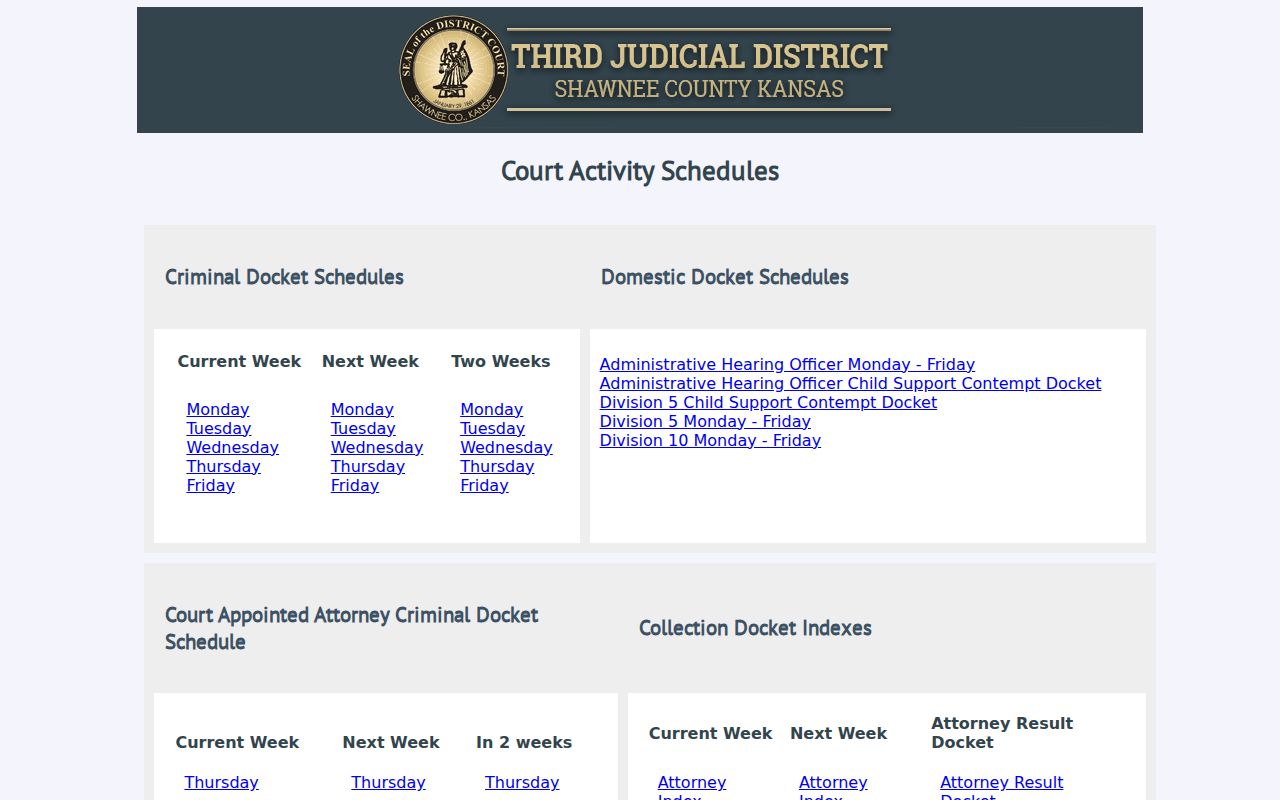
Use this view as a starting point, then confirm any setting that affects attendance.
Shawnee County Calendar Docket Types
Ask the daily docket what is set. Ask the appearance docket what has been entered. Stacy Pletcher, Clerk of the District Court, maintains the appearance docket for district cases through the clerk's office and its case departments. A hearing notice, a live list, a display board, and an appearance-docket entry can each reflect a different moment in the same scheduling process, so note which source you consulted.
| Source | Best use | Limit |
|---|---|---|
| Daily docket | Date and courtroom activity | Not an outcome |
| Appearance docket | Chronological events | Documents may be separate |
| Hearing notice | Ordered date and place | Can later change |
| Display board | Current room | At the courthouse |
If sources conflict, call the case department and keep the case number ready so staff can tell similar names apart.
Finding Your Court Date
Shawnee County offers several ways to check a court date. Use more than one when a hearing is near or an earlier setting already moved.
- Read the Notice of Hearing for the day, time, and courtroom.
- Check the official daily docket for date-specific activity.
- Search Kansas CaseSearch for the public event record.
- Call the relevant department through the official contact directory.
- Ask at the clerk's counter or use the courthouse public terminal when lawful detail is not online.
- After security, check the display boards across from the elevators.
Kansas Rule 22 recognizes two access levels, which is why the counter and terminal matter. Some public information appears only at the courthouse terminal, not on the portal. Nonpublic information stays unavailable through both.
Shawnee County Courtroom Date Checks
The county's Find Your Courtroom instructions route visitors through the south entrance security checkpoint. Displays sit across from the elevators there. Search by party name or wait for your case number, depending on the display. A label such as courtroom 3A points to the third floor. Note that the board can carry an assignment newer than a printed notice.
The official courtroom-display example shows the method used after entry.
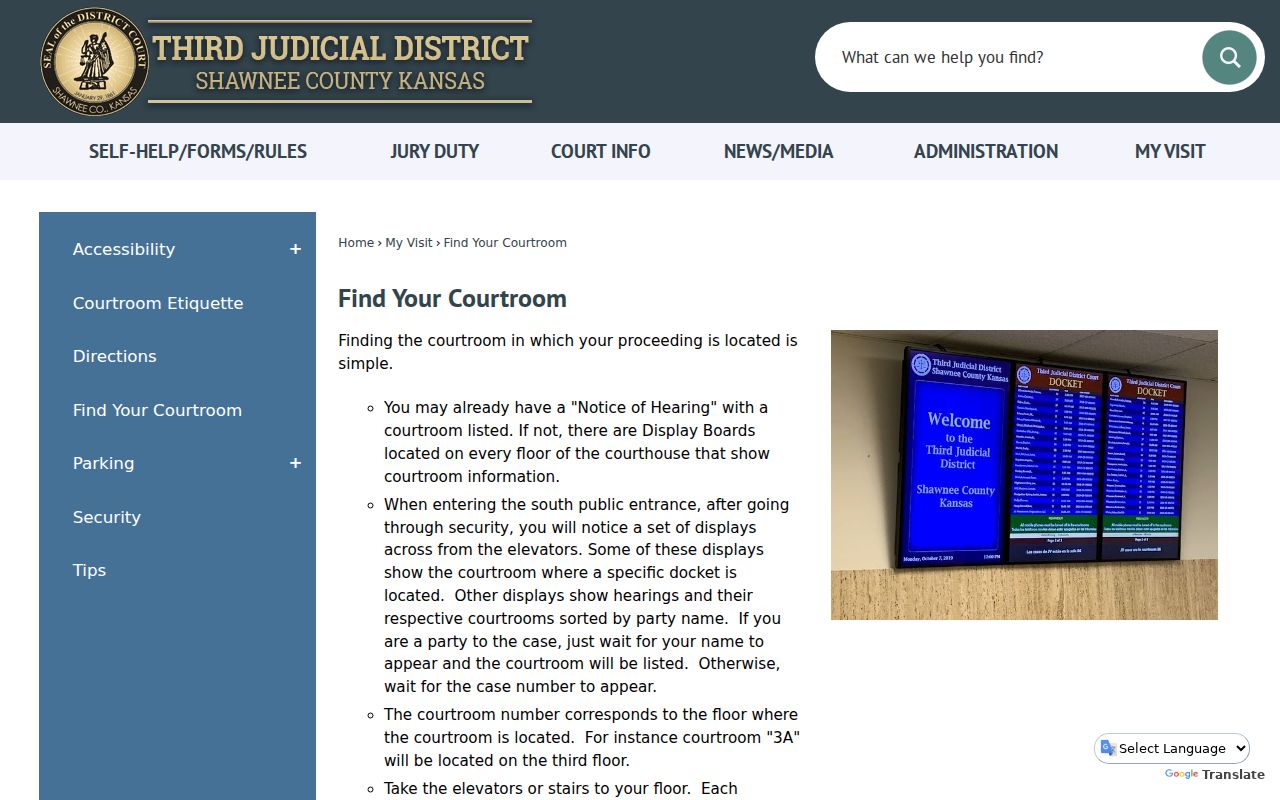
Bring the case number with you. If the listing is unclear, confirm the division in the contact directory before walking into a room.
How to Read a Court Setting
A setting line packs several fields into one row, and the label is a stage, not a final event. "Pretrial" covers case management, "Motion" marks a request for a ruling, and "Trial" identifies a merits setting. Labels like "Small claims," "collections," and "traffic" name specialized sessions.
| Date | The scheduled day, checked against later entries. |
|---|---|
| Time | The docket-call or individual setting time. |
| Courtroom | The room and floor, subject to change. |
| Judge | The judicial officer or assigned division. |
| Setting Type | The planned event, such as pretrial, motion, or trial. |
Some domestic-relations hearings happen by Zoom under department instructions. A remote label changes how you attend, not which court owns the case, so follow the notice or the clerk's current direction.
Shawnee County Calendar Changes
The court news archive reported a small claims change. Those sessions moved to alternate Mondays at 8:00 a.m. in courtroom B-15 beginning January 1, 2026. The same archive listed limited-actions sessions on Tuesday mornings and afternoons. A January attorney memorandum set the general limited-actions pretrial at 8:45 a.m. instead of 8:30 a.m. That change starts July 1, 2026, still in person.
That is why stale notes should never drive a courthouse trip. The administrative-order archive also carries changes in court operations.
The archive shows where Shawnee County posts court administration material.
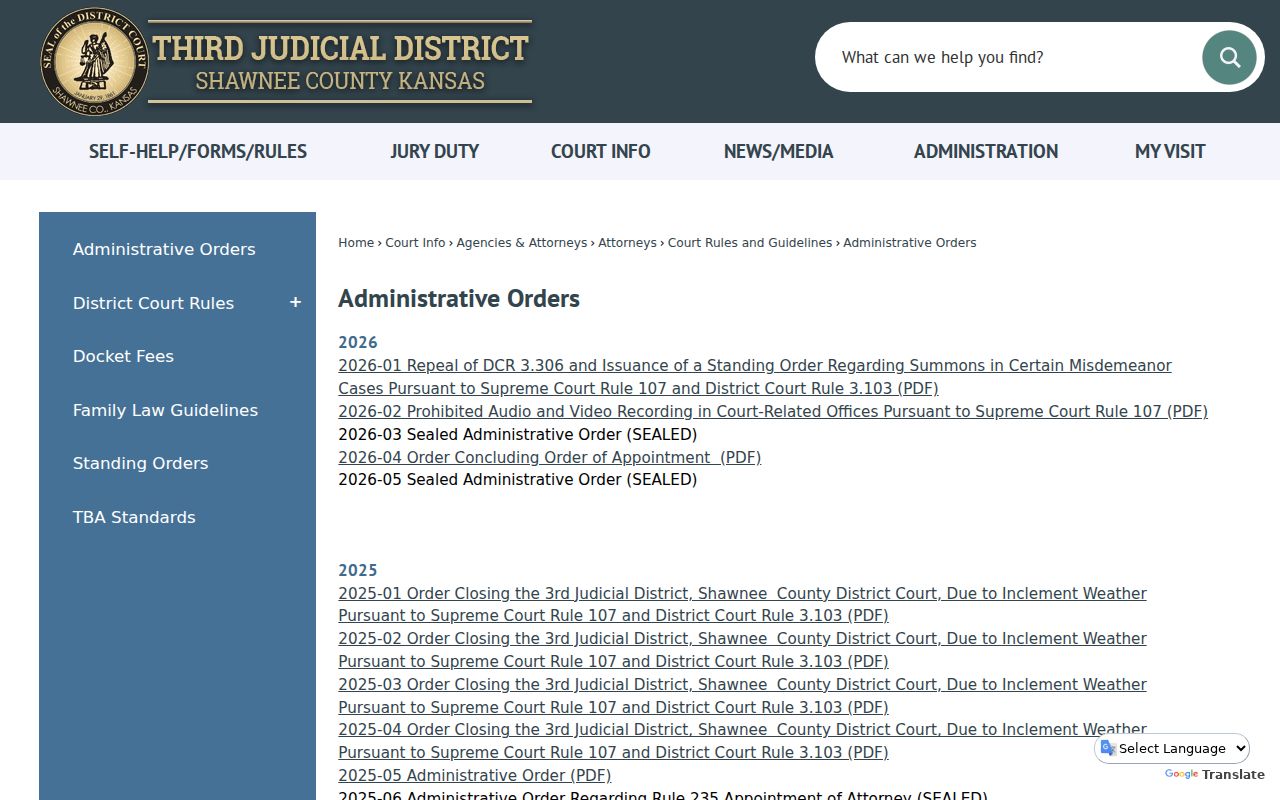
An order supplies authority, but the live setting still needs a case-specific check.
Continuances, Resets, and Cancellations
A continuance moves an expected setting; it does not dismiss the case. A reset supplies a new date. A cancellation removes a planned event without necessarily ending the matter. For local procedure, the Third Judicial District rules include DCR 3302 on notice of settings. They also include DCR 3319 on criminal continuances.
The official rules page governs local setting procedure.
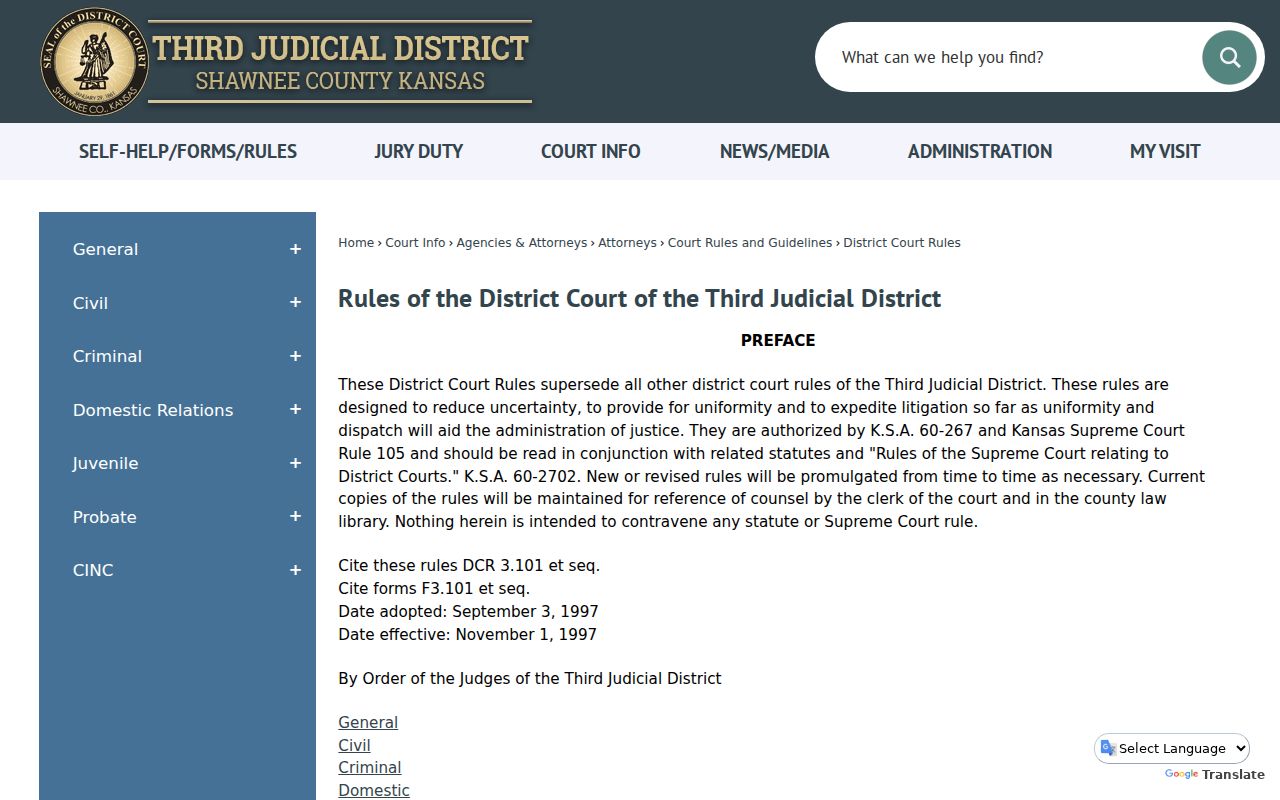
After seeing "continued," look for the next event, and if none appears, ask the department whether a new notice issued.
- Continued
- The event did not proceed on its original date.
- Reset
- A replacement setting was placed.
- Cancelled
- The event was removed, though the case may remain active.
Shawnee County Court Date Reminders
A July 8, 2026 announcement introduced text reminders through the Kansas Courts hearing-reminder portal. Registration helps with notice. It does not change a court date. It does not replace the Notice of Hearing. Read the current portal instructions before relying on the form fields.
The official portal shows the service Shawnee County links to.
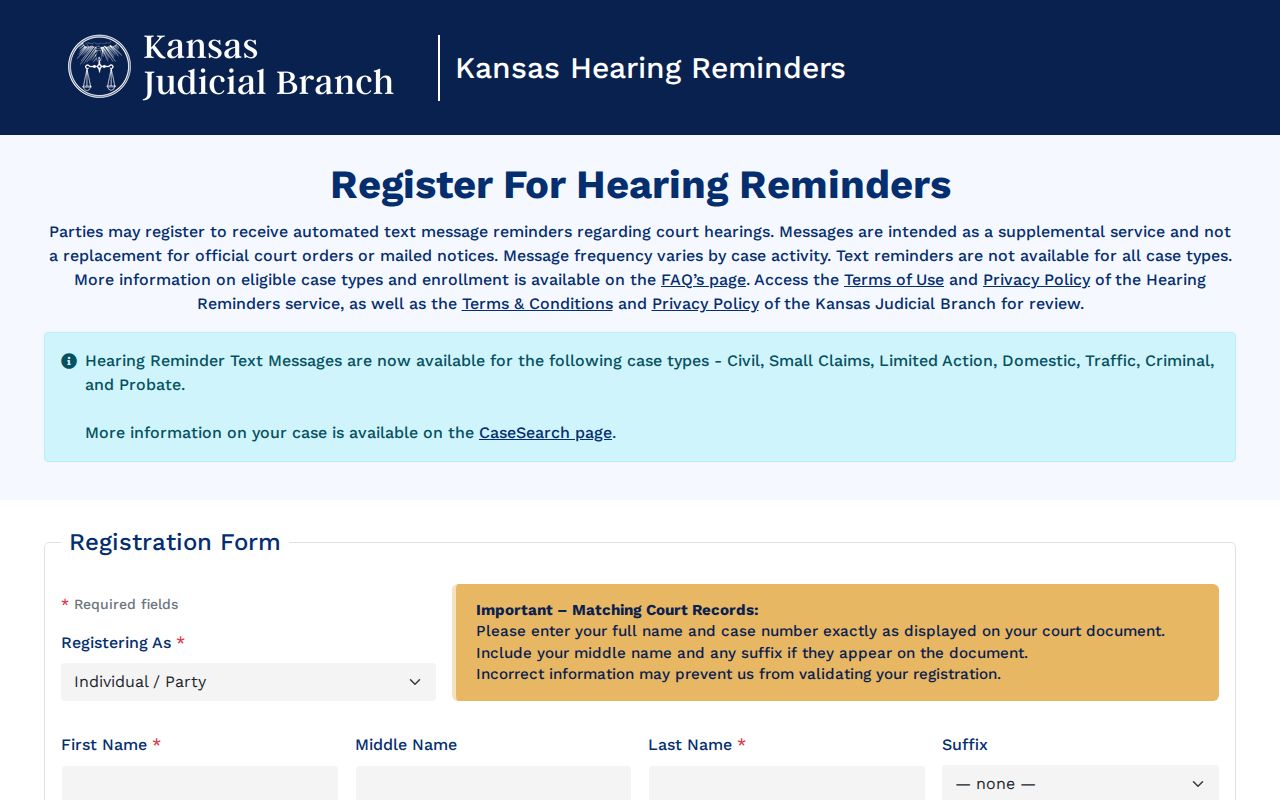
A reminder is a backup. The docket, notice, and responsible clerk confirm the setting.
If You Miss a Court Setting
Act promptly if you miss a setting. Check the appearance docket first. Then contact your lawyer or the department handling the case. Give staff the case number, the missed date, the setting type, and current contact details. Ask what the judge entered and whether a new date exists. A case leaving the daily list does not mean dismissal.
Missed a Setting? A missed appearance can lead to a failure-to-appear entry, warrant, bond consequence, or other court action.
Contact counsel or the responsible clerk department at once and follow the court's direction.
A licensed Kansas attorney can advise you about the legal effect.
Online information can lag, and it is not the official court record. For an exact or certified copy, the clerk can point you to the right route.
Shawnee County Calendar Settings
Three kinds of entries do three different jobs. A calendar entry tells you what was supposed to happen. An appearance-docket entry tells you what the clerk wrote down. A filed order tells you what the judge decided. Keep those layers apart when you read a Shawnee County docket. Record the event date and the entry date. Name the source. Then state plainly whether the item was only scheduled or actually took place. A motion setting, for instance, proves that someone asked the court for relief. It proves nothing about whether the judge granted it. A trial setting does not mean a trial began. It does not mean a verdict came in or the case closed.
Missing from view is not the same as nonexistent. Sealed, juvenile, adoption, mental-health, and expunged matters can all be restricted from public court records. An event left off the internet may still show on a terminal under Kansas Rule 22. Ask the clerk instead of reading silence as an answer. When you need a filed order, give staff the case number. Add the document title and a rough date. That beats asking for every filing tied to a party name.
For a clean record of any hearing, note the date searched. Also note the time in Central Time, the court or division, the case number, and where the answer came from. Say whether your source was the online daily docket. It might instead be Kansas CaseSearch, a hearing notice, the courthouse board, or a clerk's reply. If a setting shifts later, keep both results and the times you checked each one. That paper trail shows what changed. It also stops a stale capture from passing as the current court calendar.